Introduction
Pet owners who suspect their dog has ingested cannabis may wonder whether to make their dog vomit. This page explains what the ASPCA says and why the first step is a call to a veterinarian or poison control.
Important Note: Before attempting to make your dog vomit, always call your veterinarian or an emergency pet poison helpline. Some cases require immediate medical care rather than at-home treatment.
What the ASPCA Says About Making Your Dog Vomit
Do not make your dog vomit on your own.
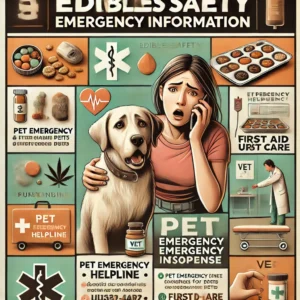
Call your veterinarian or the ASPCA Animal Poison Control Center at (888) 426-4435 first (a consultation fee may apply). Tell them what your dog ate, how much, and anything else that seems relevant. They will tell you whether to bring your dog in or whether vomiting at home is appropriate.
The ASPCA warns that trying to induce vomiting at home can be dangerous. It says hydrogen peroxide is the only method that can be used to get a dog to vomit safely at home, and even then only under the guidance of a veterinary professional, because too much peroxide can be a problem.
The ASPCA also says not to use salt, a finger or object down the throat, olive oil, ipecac, mustard, toast, water or milk. Some of these are harmful, and the rest do not work.
🚨 Emergency Tip
If your dog is showing severe symptoms, do NOT attempt home treatment—take them to the nearest veterinary clinic immediately.
Alternative Veterinary Treatments
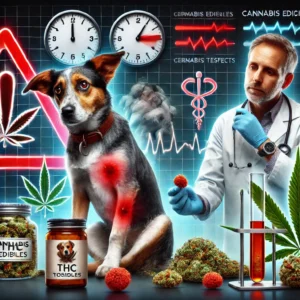
Because there is no antidote for THC, a veterinarian’s treatment focuses on supportive care and managing signs, according to Cornell. Depending on the dog, this can include:
- Activated charcoal: Pet Poison Helpline lists giving activated charcoal to bind marijuana in the stomach and prevent further absorption. Cornell says dogs that are already showing signs should not be given it, because of the risk of aspiration.
- Intravenous fluids: given to support hydration, according to the MSD Veterinary Manual and VCA.
- Medications: anti-nausea medicine and medicine to calm agitation, according to the MSD Veterinary Manual and VCA.
- Intensive care: severely affected dogs may need more intensive care, including breathing support with a ventilator and medicine to prevent seizures, according to Cornell.
Conclusion
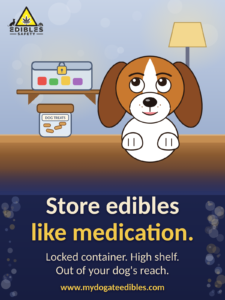
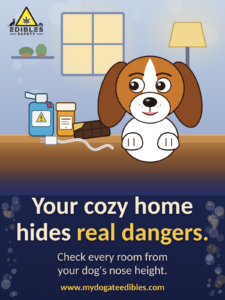
Do not make your dog vomit unless a veterinarian or poison control tells you to. Call your veterinarian or the ASPCA Animal Poison Control Center at (888) 426-4435 (a consultation fee may apply). Preventative measures, such as securing cannabis edibles out of reach, remain the best way to protect dogs from accidental ingestion and toxicity.